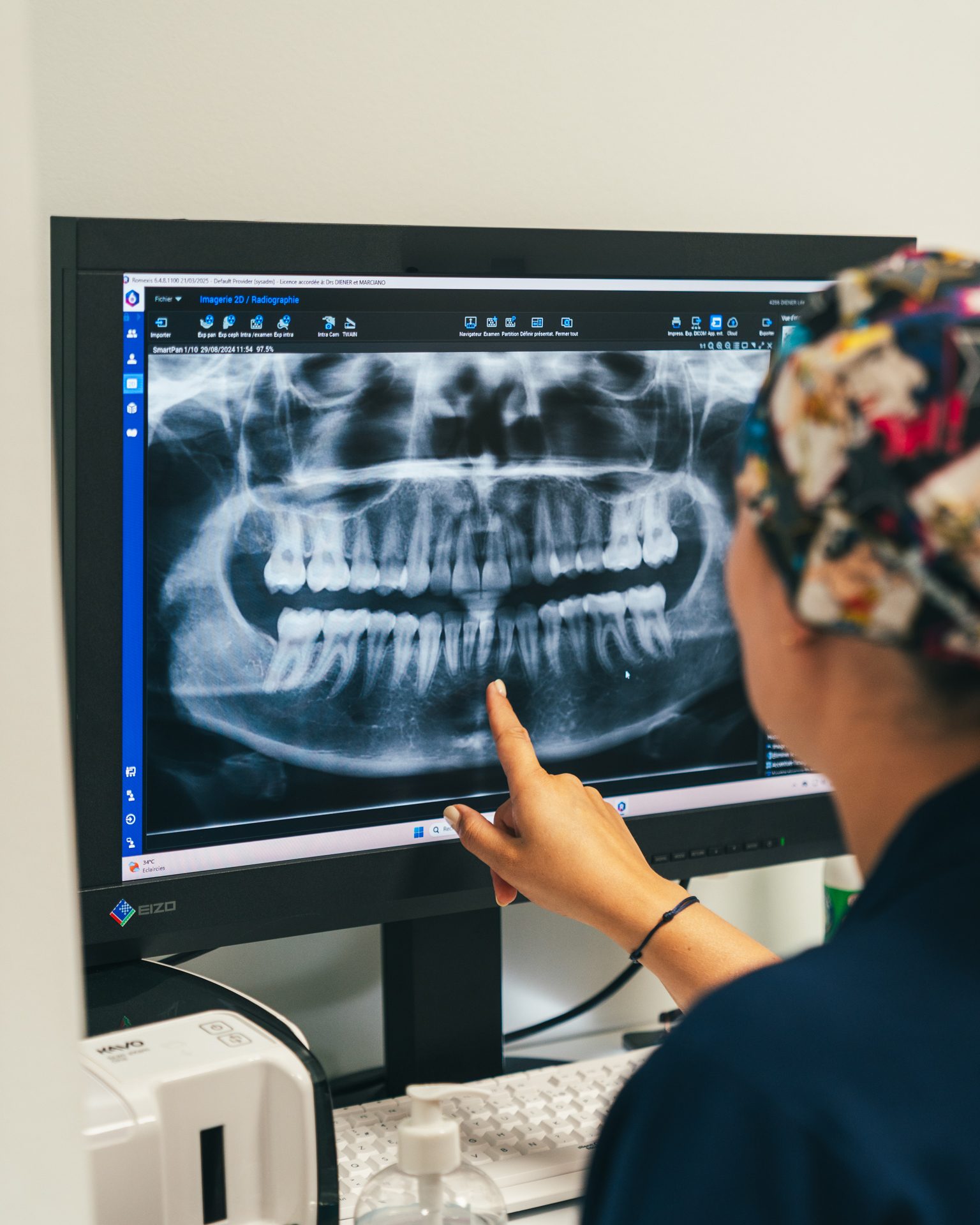
Inlays and onlays
Depending on the size of the decay and the condition of the tooth, we choose the most suitable restoration, preserving as much of the natural tooth as possible.
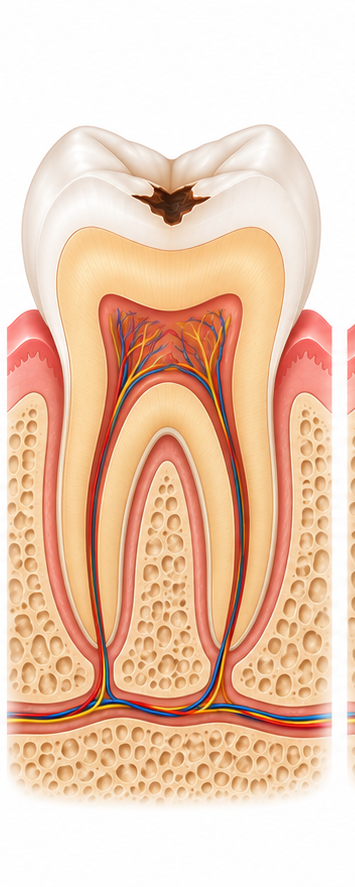
For a small cavity: the composite filling
We remove the decay and fill the cavity with a tooth-coloured composite resin.
The treatment is carried out under rubber dam (a thin sheet that isolates the tooth from saliva for perfect bonding), in a single appointment.
For a more damaged tooth: the ceramic inlay and onlay
When too much of the tooth is lost for a filling, we make a custom ceramic piece that is bonded to the tooth.
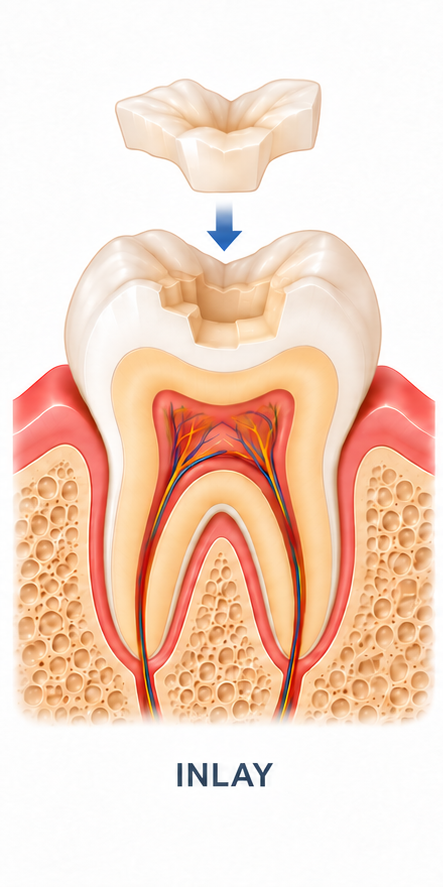
The inlay
It fills a cavity inside the tooth, without covering the cusps.
It is the solution when decay, or an old filling, has hollowed out the centre of the tooth but its walls remain strong.
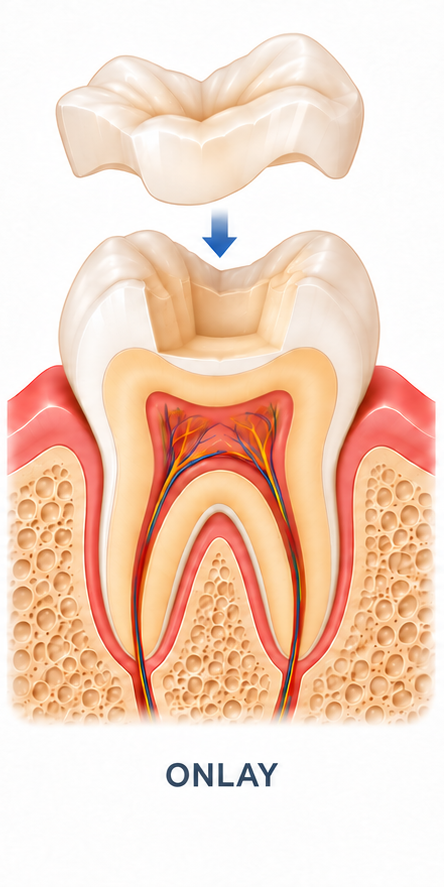
The onlay
It also covers one or more cusps of the tooth, when they are weakened or broken.
The result: a strong, long-lasting restoration, a very natural look, a tooth better protected than with a large filling, and more of the tooth preserved than with a crown.
The steps
Preparation
We remove the decay and old fillings, then shape the tooth.
Digital impression
A camera records the tooth in 3D, with no impression paste.
Manufacture
The piece is designed and milled in ceramic by our laboratory in Saint-Louis.
Bonding
The piece is bonded under rubber dam and becomes one with the tooth.
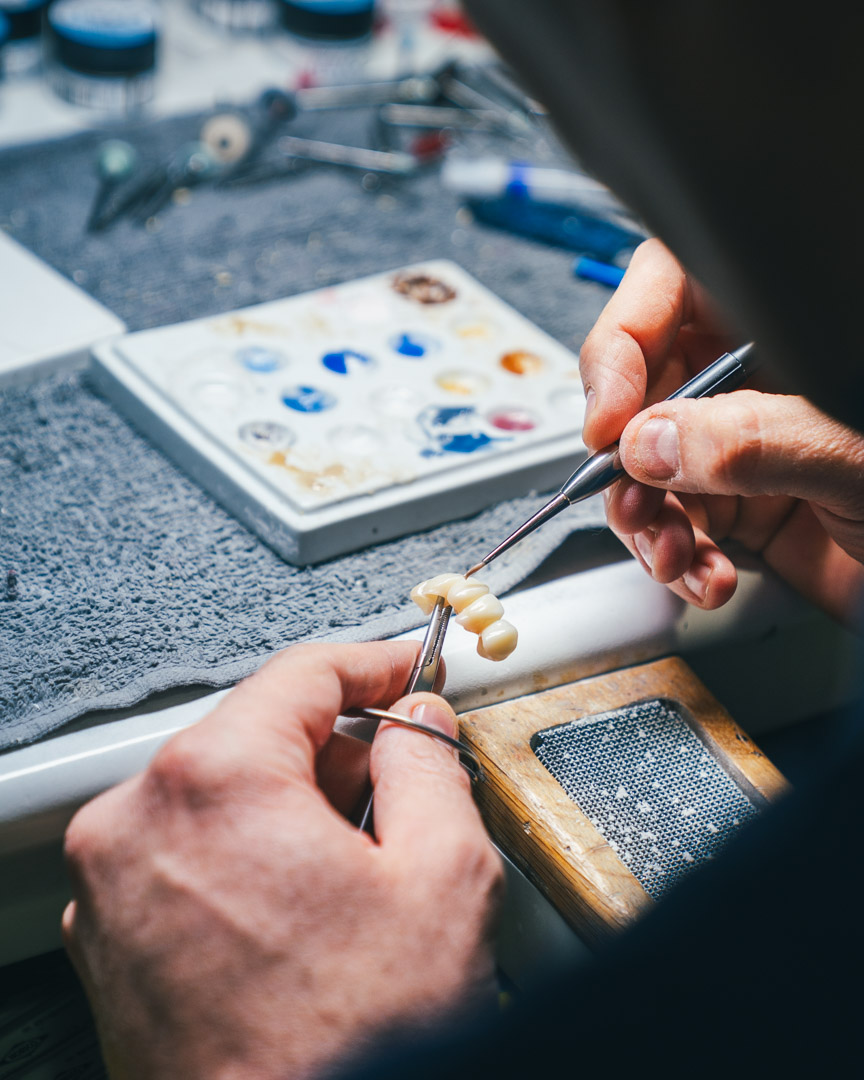
Made here, in Saint-Louis
Your inlays, onlays and crowns are made by a laboratory based in Saint-Louis, equipped with its own milling machines.
Everything is made on site, close to you and to your dentist: communication is direct and every piece is carefully checked.