Periodontal disease
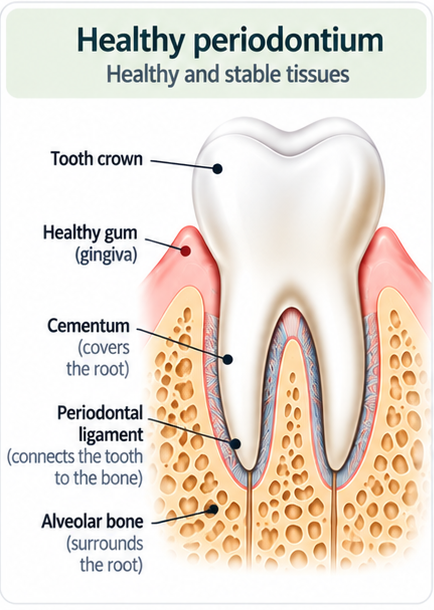
Your teeth are held in your jaw by the periodontium, the tissues that support them:
the gum;
the bone surrounding the root;
the ligament, which attaches the tooth to the bone;
the cementum, which covers the root.
Periodontal disease is an infection of these tissues, caused by the bacteria in dental plaque. Left untreated, it gradually destroys the support of the teeth: it is one of the leading causes of tooth loss in adults.
What is periodontal disease?
It develops in two stages:
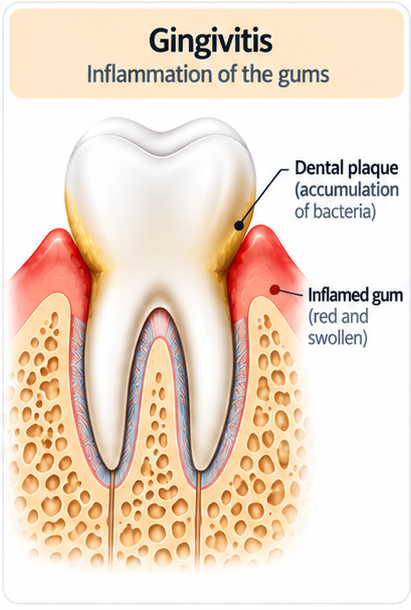
Gingivitis: the inflammation only affects the gum. At this stage, it can be reversed with appropriate care.
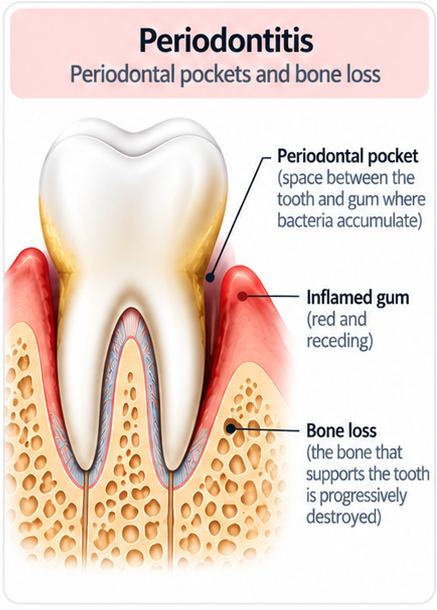
Periodontitis: the infection spreads deeper and attacks the bone and ligament. Lost bone does not grow back on its own, which is why it is important to act early.
What are the symptoms?
At the gingivitis stage
red, swollen gums;
bleeding when brushing;
bad breath or an unpleasant taste in the mouth.
The disease is often painless, and smoking can mask the bleeding: you can be affected without realising it. Regular check-ups help detect it before it progresses.
At the periodontitis stage
In addition to the signs of gingivitis:
receding gums, teeth that look longer;
“black triangles”: gaps between the teeth that were not there before;
teeth that become loose or shift;
the formation of periodontal pockets.
How do periodontal pockets form?
When plaque settles under the gum, the inflammation gradually destroys the fibres that attach the gum to the tooth, then the ligament and the bone. The gum comes away and a space forms along the root: this is the periodontal pocket. Bacteria thrive there, out of reach of the toothbrush, which keeps the infection going and deepens the pocket. This is why the disease does not heal on its own: these areas must be cleaned at the practice.
What causes periodontal disease?
Smoking, a major factor
Smoking is one of the main causes of periodontal disease. It promotes infection, speeds up bone loss and masks the warning signs: smokers' gums bleed less, which often delays diagnosis.
Other factors
insufficient oral hygiene and tartar;
diabetes;
heredity;
stress and fatigue.

How is it diagnosed?
A full periodontal examination shows how far the disease has progressed. It includes:
measuring the depth of the pockets around each tooth (charting);
X-rays to assess the bone level;
examining dental plaque under the microscope;
a clinical assessment and a review of your symptoms.
How is periodontal disease treated?
Discover the steps of our treatment.