Understanding tooth decay
Tooth decay is the most common dental disease. Caught early, it is simple to treat. Left to progress, it gradually destroys the tooth down to the nerve.
How does decay develop?
Bacteria in dental plaque turn the sugars in food into acids. These acids attack the enamel, the tooth's protective layer, and then gradually hollow out the tooth from the inside.
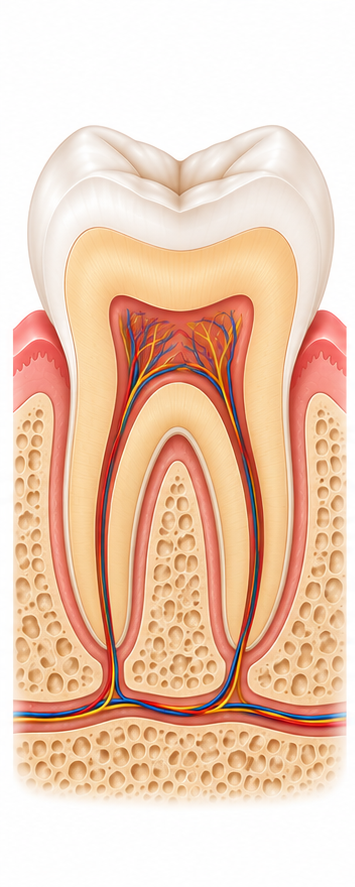
A healthy tooth is made of enamel on the surface, dentine underneath, and the pulp at the centre, which contains the nerve and blood vessels.
The stages of tooth decay
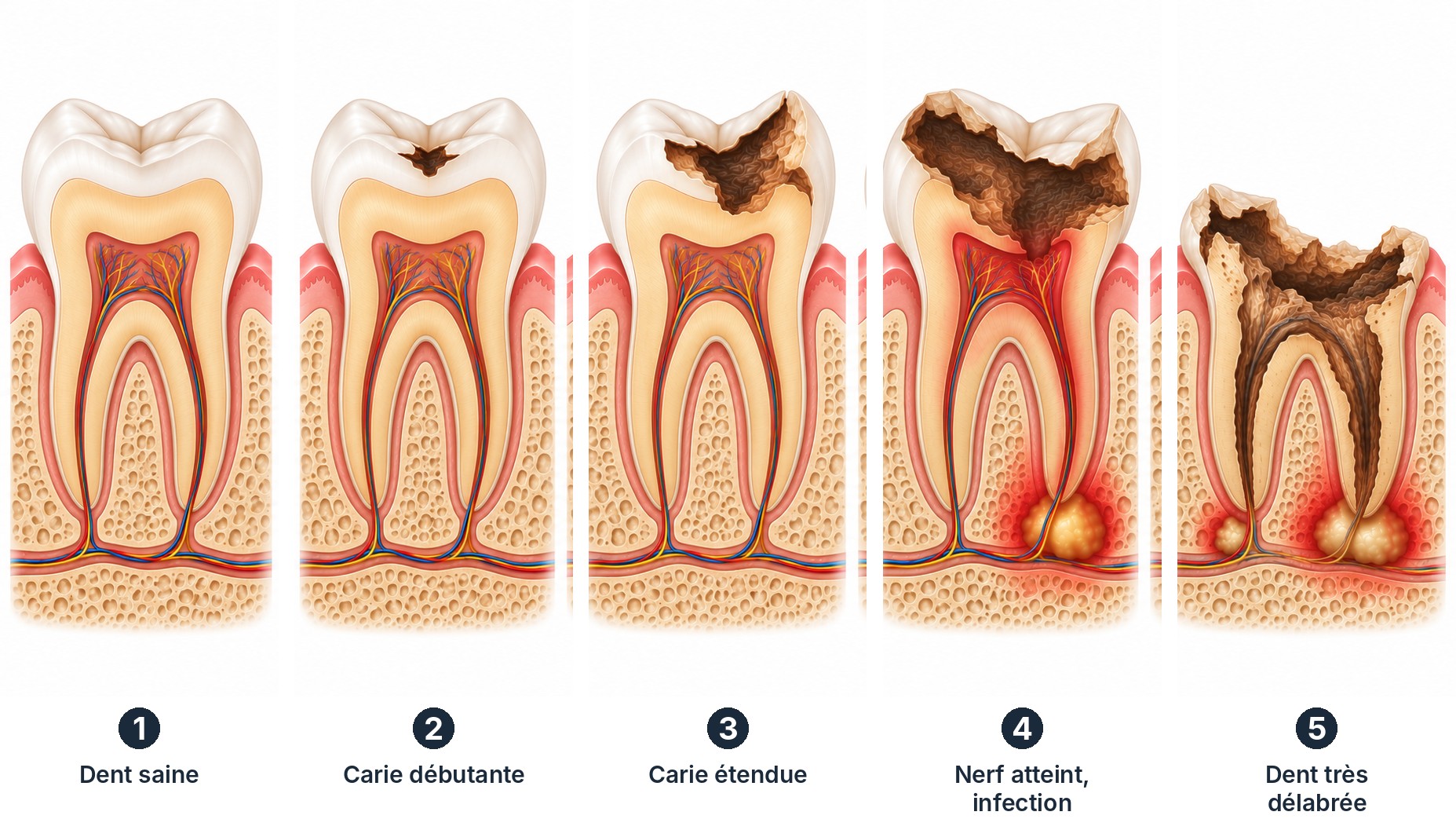
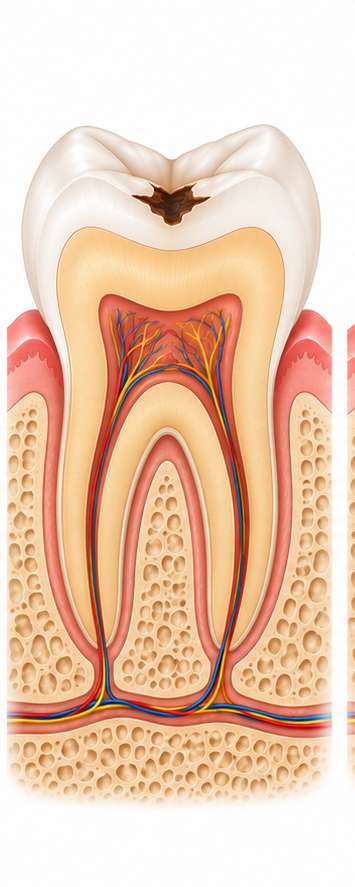
2Early decay
Decay attacks the enamel, then the dentine. It is often painless at first, then the tooth becomes sensitive to cold and sweet foods.
→ It is simply treated with a composite filling, in one appointment.
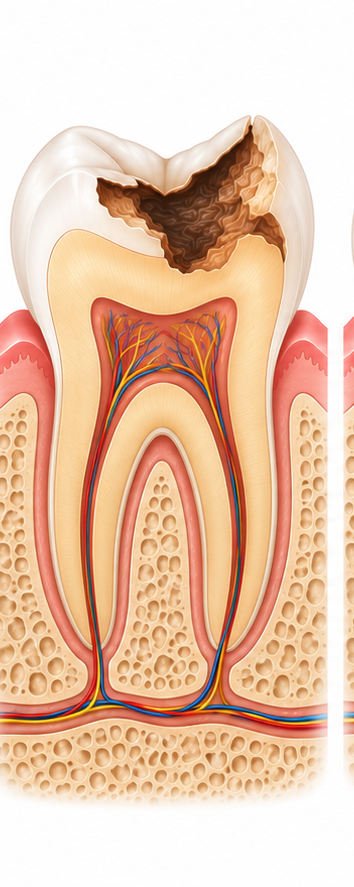
3Extensive decay
Decay spreads faster in the dentine and weakens the tooth, sometimes until a cusp breaks off.
→ We restore the tooth with a ceramic inlay or onlay.
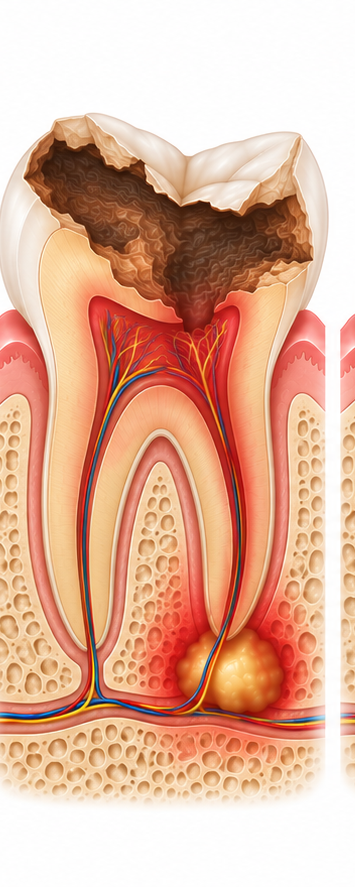
4The nerve is affected
Bacteria reach the pulp: the nerve becomes inflamed and the pain grows strong, sometimes spontaneous and at night. The infection can then spread beyond the root and form an abscess.
→ The tooth needs root canal treatment, then protection with a crown.
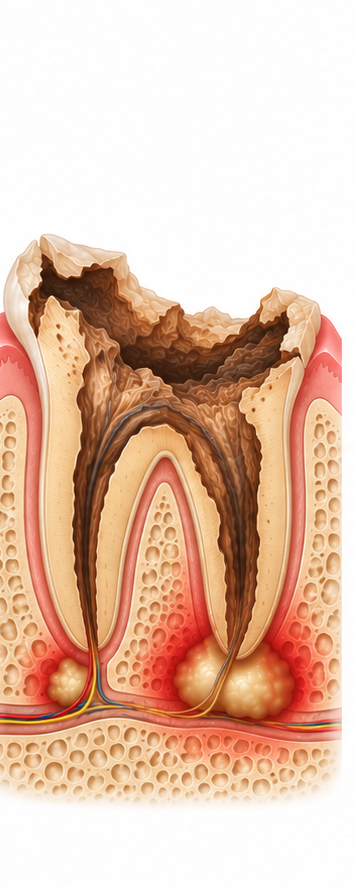
5A severely damaged tooth
When decay has destroyed most of the tooth, it sometimes can no longer be saved. We then present the options for replacing it.
Prevention is better than cure
Thorough brushing, a low-sugar diet and regular check-ups make it possible to detect decay while it is still small, and to treat it simply.