Bone grafts
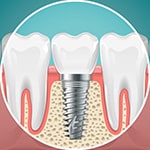
Placing an implant requires enough bone. When this is not the case, a bone graft rebuilds the necessary volume so the implant can be placed in the best conditions.
Why a graft?
After a tooth is lost, the bone that supported it gradually shrinks. It may then lack the height or width needed to hold an implant.
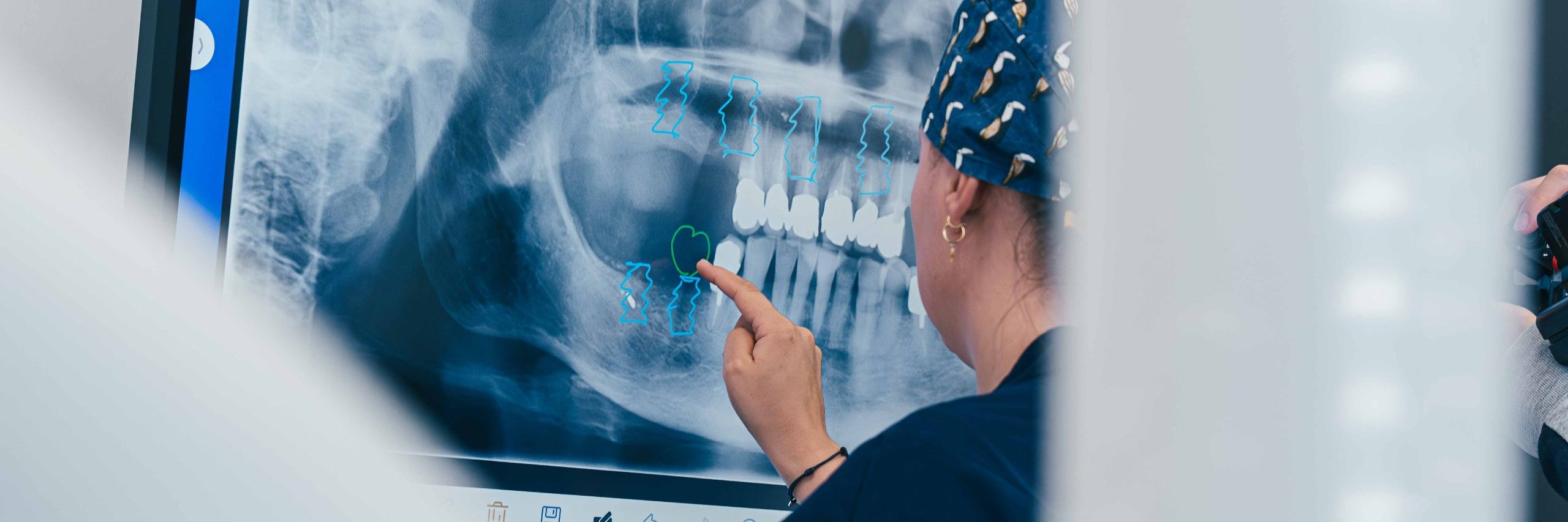
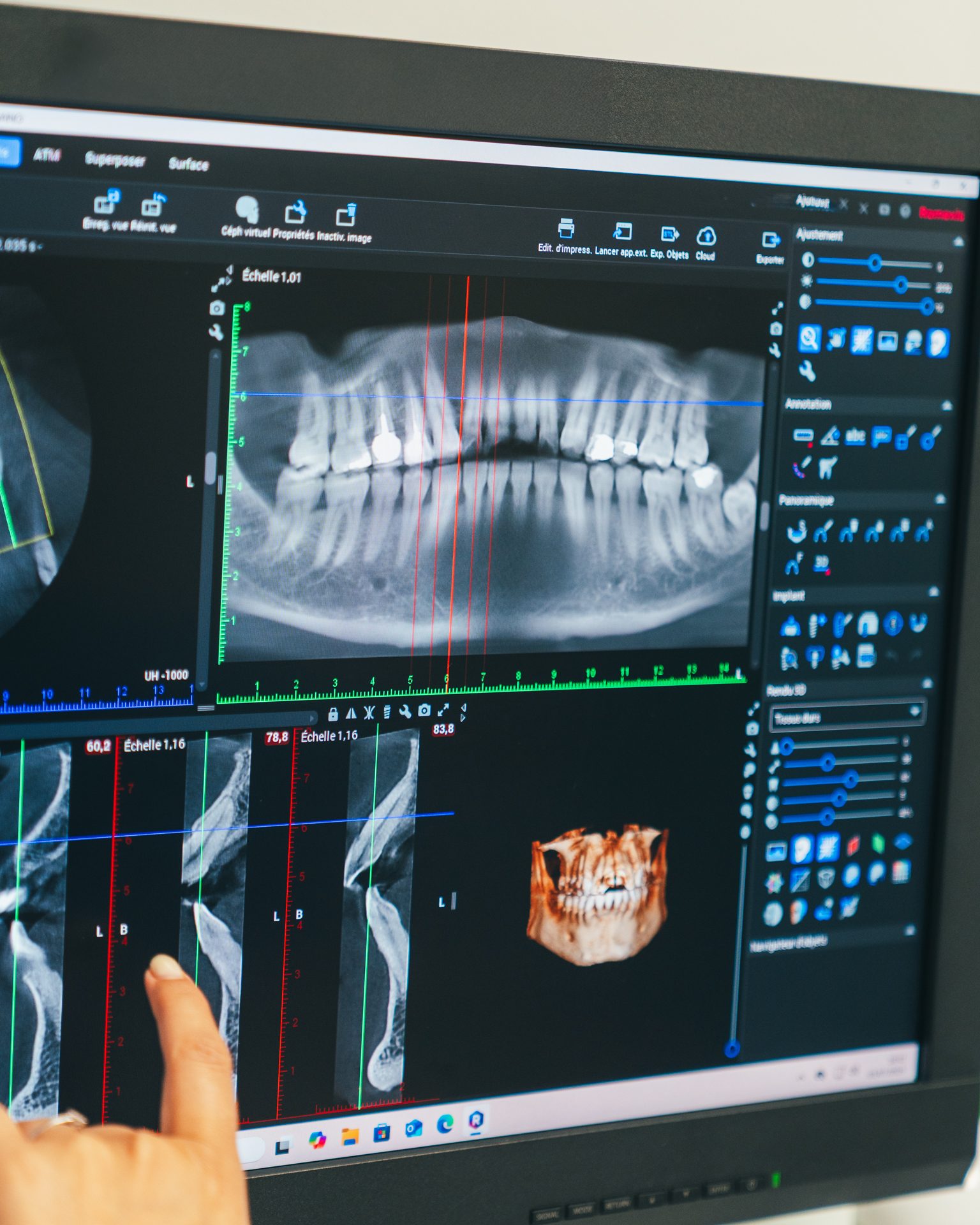
The 3D X-ray taken during the pre-implant assessment measures the available bone volume precisely. We therefore know from the start whether a graft is needed, and we plan it together with the implant placement.
How does it work?
The principle is simple: bone is added where it is missing. Depending on the volume to be rebuilt, this bone can come:
From your own mouth, for example from inside the chin or the wisdom tooth area.
From another part of your body, such as the hip or the top of the skull, for larger reconstructions.
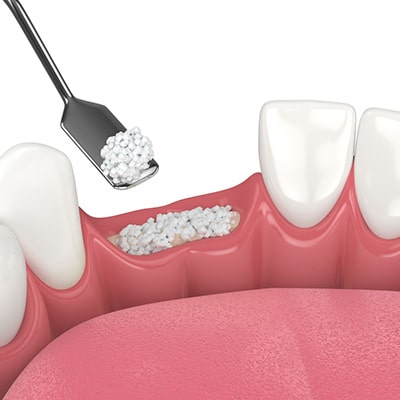
From a bone substitute of animal origin or in the form of small glass particles, which acts as a scaffold for your new bone to form.
The implants are placed once the graft has healed, usually about 5 months later. In the meantime, a removable prosthesis can be worn for your everyday comfort.
Good to know
Bone substitutes of animal origin are strictly controlled by the health authorities and hold all the required marketing authorisations.