Neuromuscular analysis
Your teeth, your muscles and your jaw joints work together. Neuromuscular analysis lets us measure precisely how they function, so we can build comfortable, long-lasting treatments.
A balance between teeth, muscles and joints
When one of these three elements is disturbed, the others adapt to compensate. Over time, the whole system weakens: muscle tension, headaches, clicking jaw, teeth that wear down or become sensitive.
These imbalances sometimes go unnoticed. Neuromuscular analysis brings them to light and shows exactly where the problem lies.
When do we carry out a neuromuscular analysis?
Before rebuilding a full arch
When we rebuild all the teeth of a jaw, with crowns, a bridge or implants, we have to decide where the upper and lower jaws will meet.
The analysis lets us confirm this position before the final teeth are made, so that your new bite is comfortable for your muscles and joints.
When teeth are worn
Over time, grinding or clenching can wear the teeth down, more or less severely. The teeth become shorter and the height of the bite decreases.
The analysis lets us determine exactly what has been worn away, and therefore the height and shape to give back to your teeth.
How does the recording work?
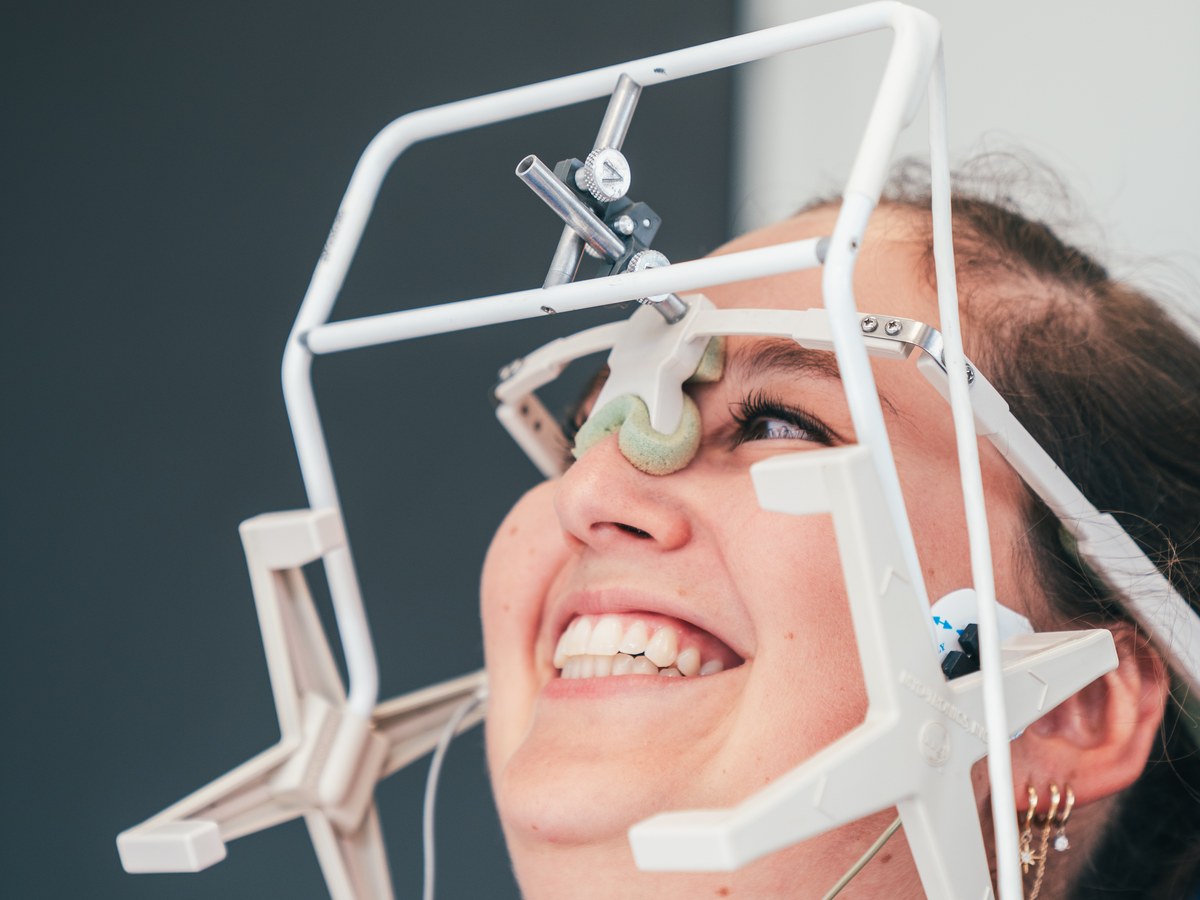
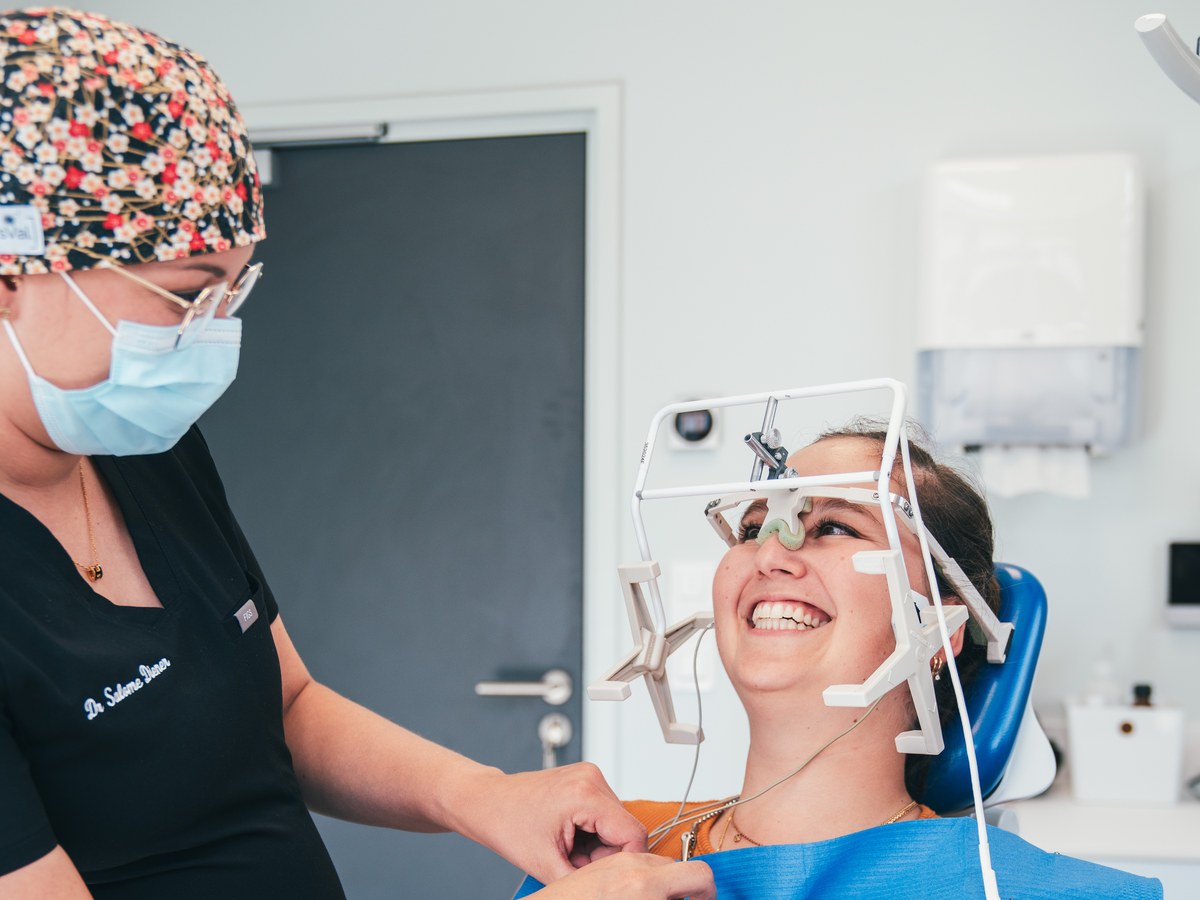
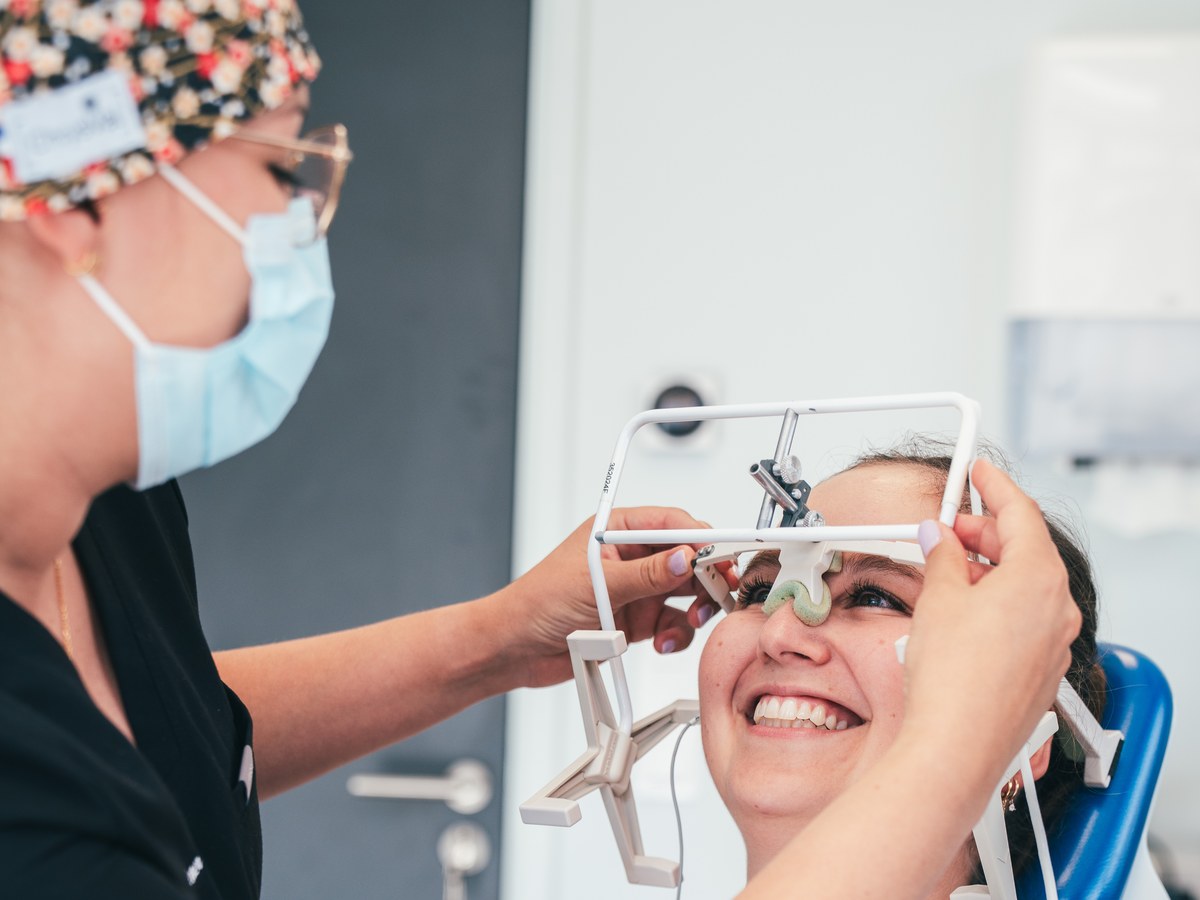
You sit comfortably in the dental chair. We place a light device on your face, which records the movements of your jaw and the activity of your muscles as you open, close and move your mouth.
The examination is painless and non-invasive.
What the analysis tells us
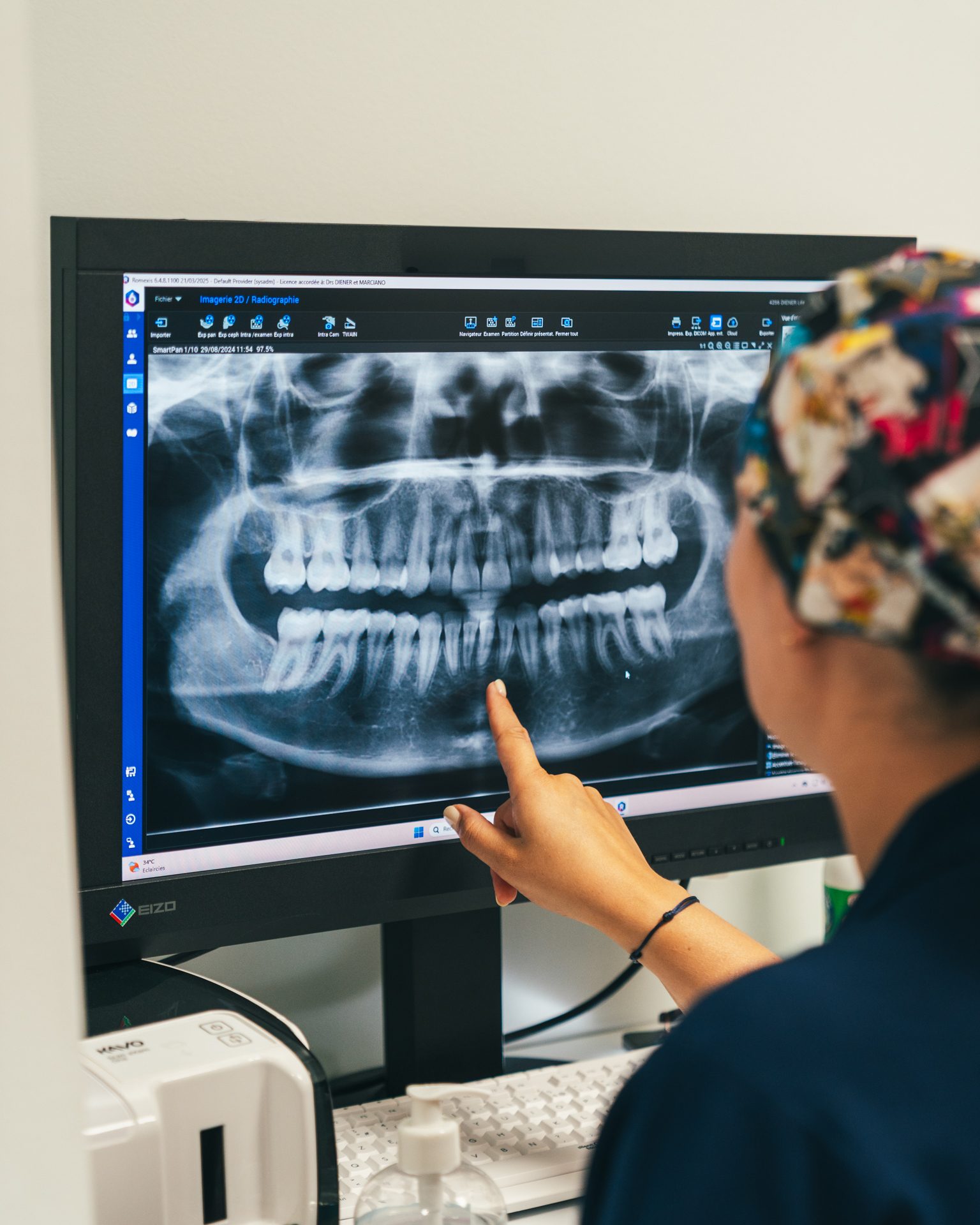
The recording shows us the position in which your muscles and joints are most relaxed. We compare it with the current position of your jaws to measure the difference.
This data then serves as the reference for the whole treatment plan, which we build in close collaboration with our dental technician.
What happens next?
Depending on the results, we may first suggest a custom-made splint, which helps your muscles and joints gradually regain their balance and protects your teeth from wear.
When teeth need to be rebuilt, we then make them in the position confirmed by the analysis: it is also an opportunity to improve their appearance.
Neuromuscular analysis on video
See in under a minute how the recording works at our practice and what we use it for (video in French).